
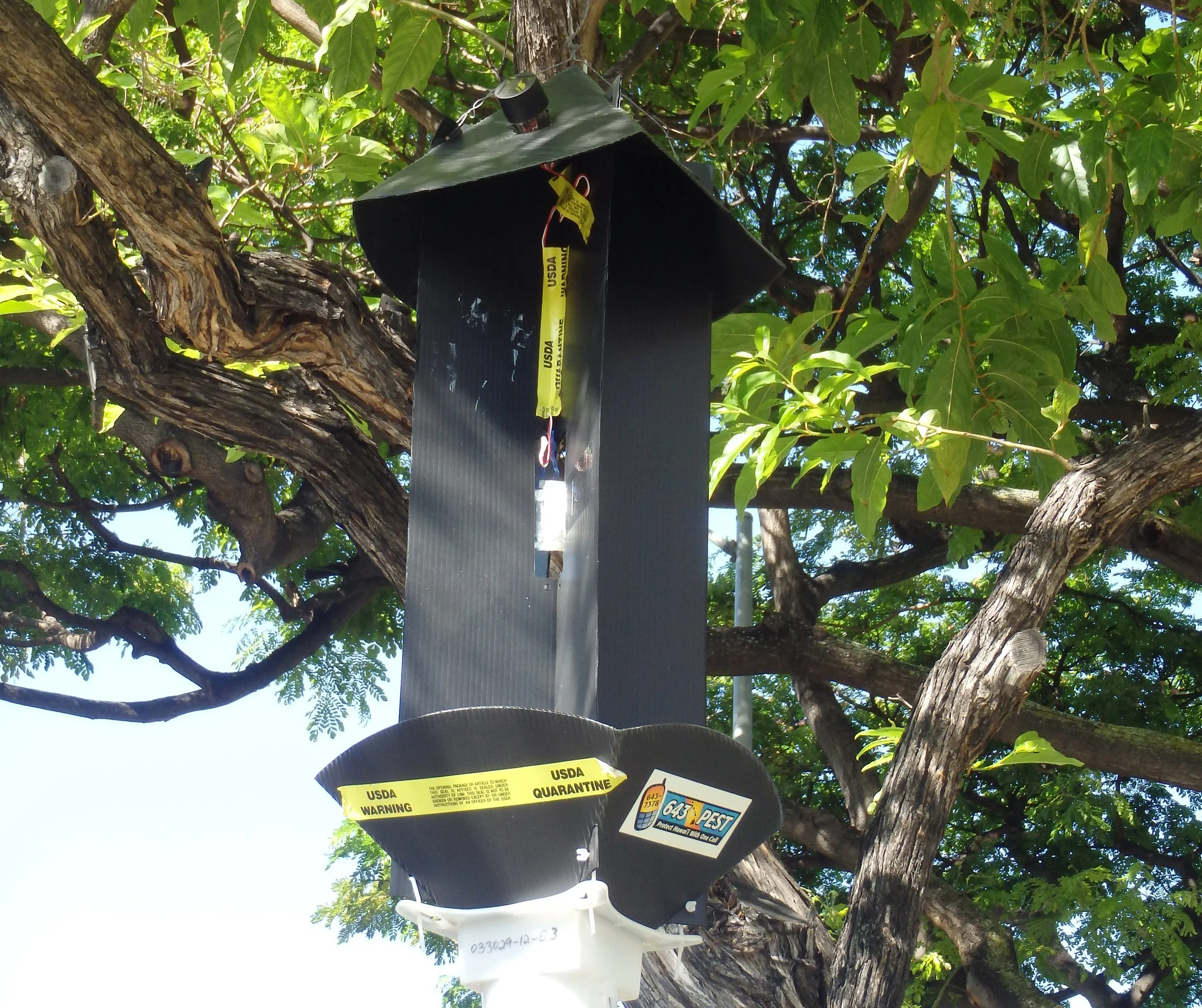
CRB Traps
Photo: www.dab.hawaii.govWhy Traps Matter
Traps are one of the most important tools for monitoring and reducing Coconut Rhinoceros Beetle (CRB) populations. They help detect beetle presence early — before large infestations take hold — and can capture adults to slow spread in affected areas.
How They Work
Pheromone lures (synthetic scent of the female beetle)
Non-pheromone lures such as decaying plant odors or natural oils. Beetles fly toward the scent and are caught in a container or bucket where they can’t escape.
Trap Types
Bucket traps: Durable and effective; typically hung in coconut palms, on poles, or near compost piles
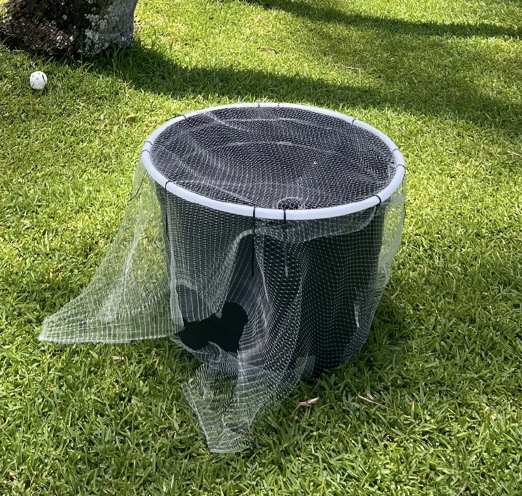
Barrel traps: Used for high-density areas like golf courses or mulch facilities.
Light traps: Sometimes used for night monitoring; attract both male and female beetles.
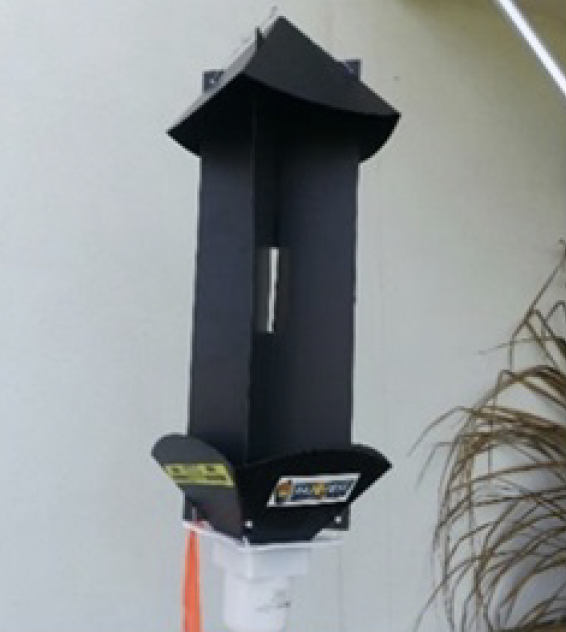
Panel traps:
Attract and catch beetles during flight at night using pheromone and an LED light .
Homemade traps: Can be built from recycled plastic buckets or soda bottles and baited with coconut waste, fermenting fruit, or neem-based attractants.
Do-It-Yourself Trap Construction
A very technical DIY guide, courtesy of www.CRBHawaii.org
DIY guide courtesy of www.savehawaiianpalms.com
Watch barrel trap demos:
Source: University of Guam CNAS
Best Placement
Mount traps traps away from palm crowns, 4–6 feet above ground or in palm canopies away from daily activity areas.
Placement: Keep them near known or potential breeding sites — mulch piles, compost, stumps, or green-waste stockpiles.
Avoid: placing near healthy palms, to prevent drawing beetles toward living trees.
Spacing: Place traps every 50–100 yards in known infested areas.
Maintenance
Checkups: Check traps weekly and empty regularly to prevent overflow and decay odor.
Replace pheromone lures every 2–3 months (or as directed).
Remove and destroy captured beetles — freeze or crush before disposal.
Wash traps occasionally with mild soap and water.
Coordination
Coordinate with neighbors or community programs to ensure traps are maintained island-wide.
Replace pheromone lures every 2–3 months (or as directed).