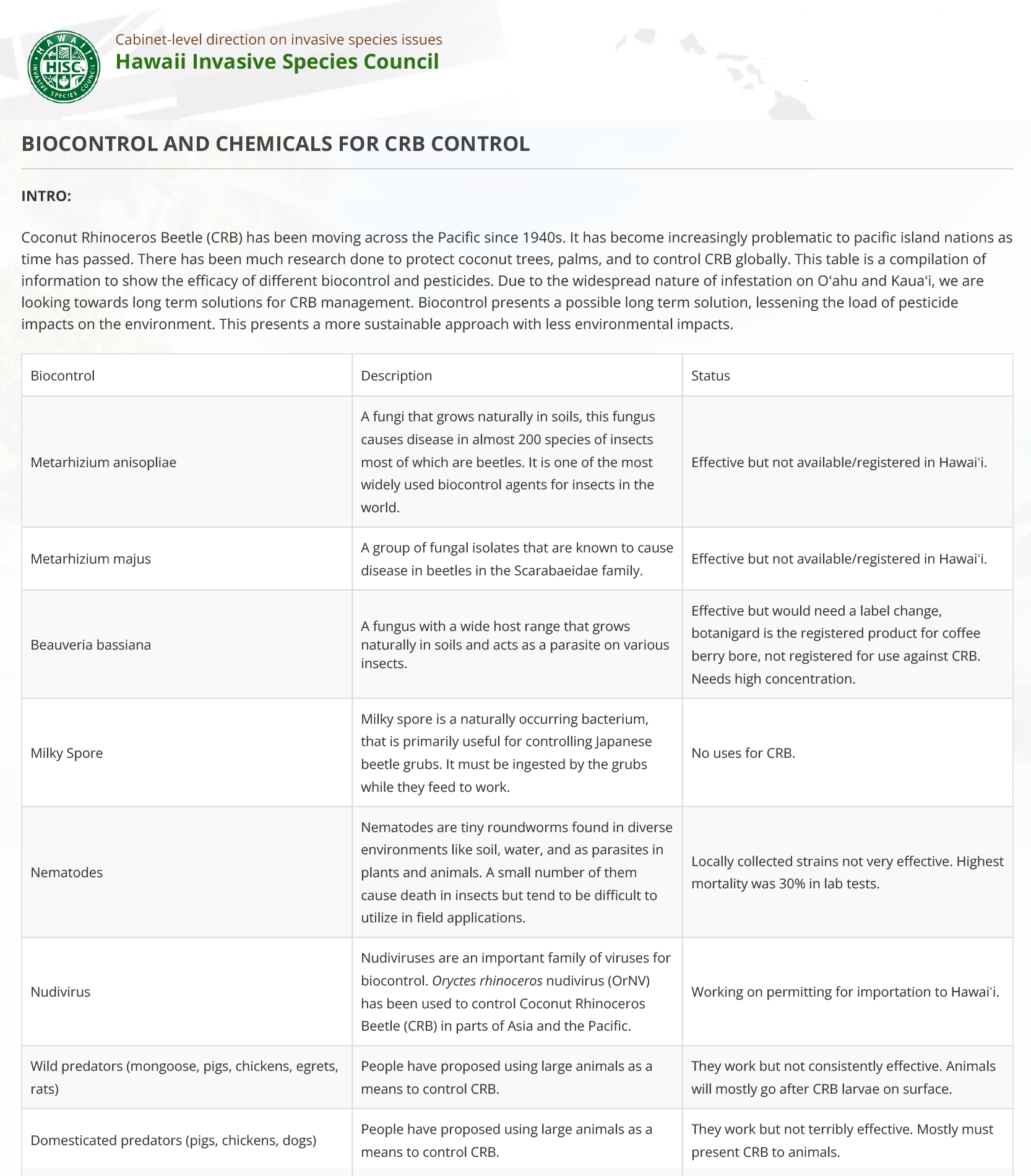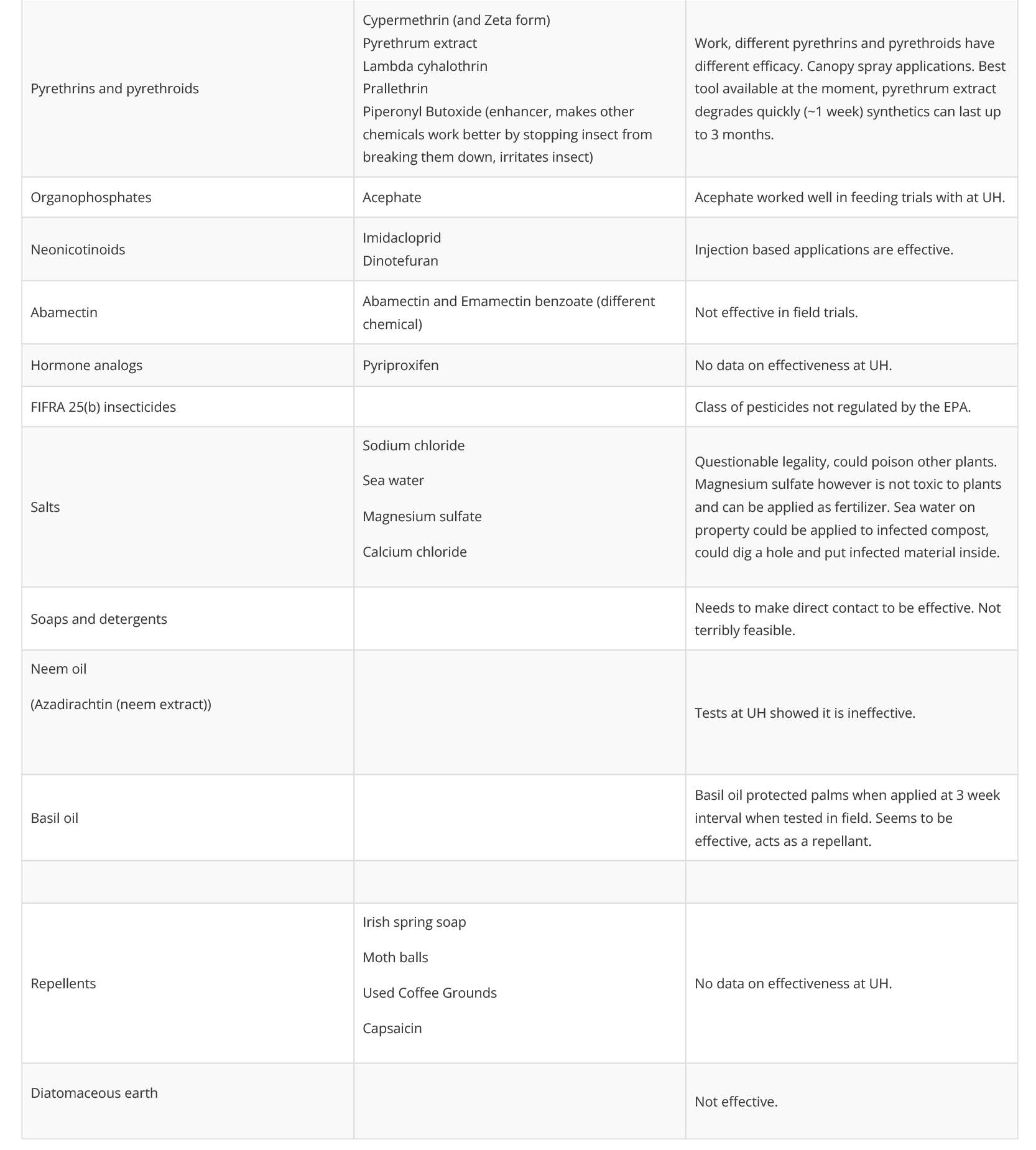
CRB Action Kaua‘i provides neutral, fact-based summaries grounded in published research, professional input, and field observations. No single approach works in all situations. Landowners may select methods based on their goals, preferences, and regulatory requirements. Whatever methods are chosen, careful and responsible use helps protect our island community, its people, pollinators, and waters. Always follow label directions and consult appropriate professionals when using regulated products.
Essential Oils & Formula
Basil, Clove, Thyme, and Neem
The basics and a spray formula recipe.
What They Are
Botanical oils—such as basil, clove, neem, and capsicum—are aromatic plant extracts used by some landowners as scent-based deterrents. These materials are not insecticidal.
How They Work
Essential oils form an aromatic film on palm surfaces. This may influence beetle behavior by masking plant odors or affecting sensory cues that guide beetles toward feeding or breeding sites.
When They Are Used
Landowners apply oil mixtures to crown areas, frond bases, or upper trunks as part of preventive care or after detecting activity. Oils may be combined with wetting or sticking agents to help them remain on surfaces.
Observations From Research & Field Experience
Field results vary, and effects diminish with sun, wind, or rain
Community users note the need for periodic reapplication
Ongoing studies continue to evaluate essential oils in Hawai‘i
Environment Care
These products rely on plant-derived oils such as basil, clove, capsicum, neem, and similar ingredients. They work primarily through odor, repellency, or direct contact and must reach the crown or exposed surfaces to be effective.
Although natural, concentrated essential oils can still affect pollinators and beneficial insects if sprayed directly, especially during bloom or when bees are active.
Some formulations may cause leaf burn or phytotoxicity on sensitive plants; avoid applying in hot midday sun or during drought stress.
Oil-based sprays can temporarily affect water quality if overspray or wash-off enters streams or ponds; avoid use near waterways and prevent runoff.
All applications should follow the specific product label (if present), and any homemade or non-labeled mixtures should be used cautiously to avoid unintended impacts on non-target organisms and the surrounding environment.
Summary
Essential oils are used as aroma-based deterrents intended to influence beetle behavior. They are generally part of ongoing palm-care routines and are often combined with sanitation, monitoring, and other methods.
Essential Oil Deterrent Spray for CRB Protection
Courtesy of Brown Cannon, SaveHawaiianPalms.com
This natural deterrent helps protect coconut palms by masking the odors that attract Coconut Rhinoceros Beetles (CRB) and making crown tissue unpleasant to chew or enter. These oils overwhelm beetle scent receptors and interfere with attraction to palm sap or decaying tissue. Capsaicin, derived from hot-pepper extract (oleoresin capsicum), provides a mild irritant effect that discourages boring. The addition of a sticker or light oil helps the mixture cling to fronds, forming a temporary scent and texture barrier. While it does not kill beetles, regular use can interrupt their breeding cycle and reduce crown attack success when combined with sanitation, netting, and traps. Note: Basil oil is not EPA exempt - what this means is that it needs a pesticide label to be used for pest control.
Per 1 gallon of spray solution:
1 oz. Basil Oil
1 oz. Thyme Oil
1 oz. Clove Oil
1 oz. Neem Oil
1 teaspoon Hi-Yield Spreader Sticker (or 1 tsp Dawn or Castile soap)
—
Please note: Hi-Yield Spreader Sticker increases “stick” and shine, helping oils adhere to fronds and crown surfaces. It can slightly increase heat load on tissue if over-applied, so use it sparingly on coconut palms — about 1 teaspoon per gallon, less than general label rates. You do not need a separate emulsifier because neem oil naturally contains azadirachtin, limonoids, and natural saponins, which act as mild emulsifiers, allowing the essential oils to blend smoothly into water when combined with a non-ionic surfactant such as Hi-Yield.
Essential Oil Formula
Updated 12/12/2025 per most recent research.
See our
DIY Materials & Tools Page for Essential Oil Sources
1 Gallon batch:
Start with 1/2 gallon of water in a clean bucket.
Add basil, clove, thyme, and neem oils (see Safety note below)
Agitate for ~10 seconds, until the mixture turns cloudy.
Add Hi-Yield Spreader Sticker (1 teaspoon per gallon) or soap substitute.
Add the remaining 1/2 gallon of water.
Stir or shake thoroughly before each application.
Mixing Instructions
Application
Spray the crown, frond bases, and upper trunk, avoiding heavy runoff.
Apply early morning or late afternoon to minimize evaporation and avoid tissue stress.
Reapply every 1–3 weeks, especially after rainfall or new frond emergence.
Rotate essential oils occasionally (basil, clove, peppermint, lemongrass) to maintain potency.
Safety & Storage
Essential oil mixtures should not exceed this 6% concentration. Higher levels increase risk of phytotoxicity and offer no added benefit.
Wear gloves and eye protection; capsaicin can irritate skin and eyes.
Store in a cool, dark place away from heat and sunlight.
Best Results
This deterrent performs best when used as part of an Integrated Community Strategy that includes:
Green-waste sanitation
Crown netting or physical barriers
Beetle trapping
Neighborhood coordination
Repelling one breeder prevents hundreds of future beetles.
Field Evaluation of Essential Oils in Preventing Damage from Coconut Rhinoceros Beetle in Young Coconut Palms | Read Article
Results from trial from February 2025 to August 2025 with weekly applications in 80 palms will be published soon and will be posted on this website.
Further Reading
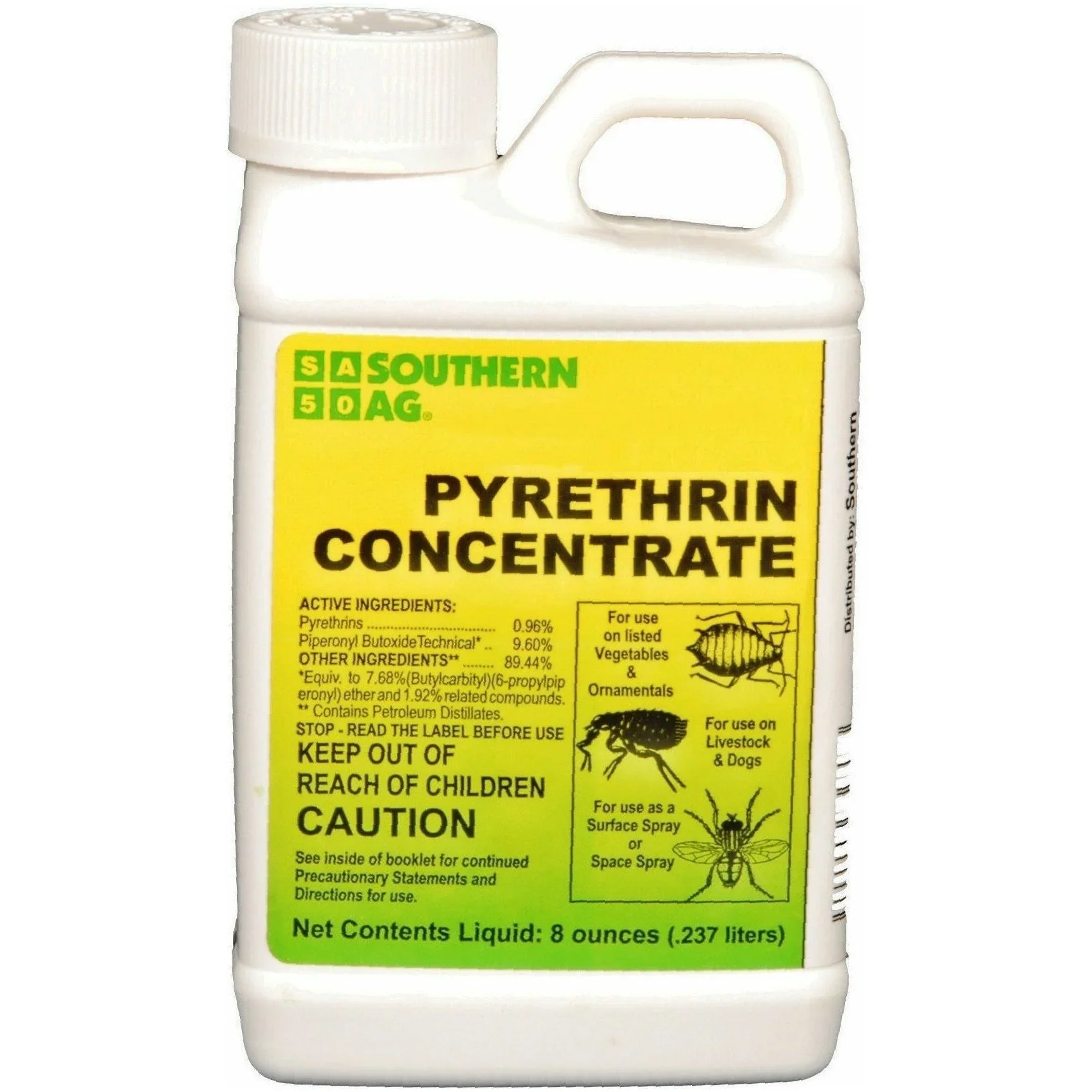
Pyrethrins and Pyrethroids
(For Post-Attack Treatments)
How They Work
Pyrethrins and pyrethroids are contact insecticides. They affect CRB only when a beetle is directly hit with spray or walks across treated surfaces. They are not systemic and do not reach larvae hidden deep in palm crowns, mulch, or green-waste piles.
When They Are Used
Landowners use these products in a variety of ways, including:
After detecting CRB activity, targeting adults active in or around the crown
As part of preventive or monitoring routines, applying light surface treatments to areas where adults may land or travel
Common application approaches include:
Crown surface sprays directed at frass, entry holes, and damaged leaf bases
Treated burlap placement (evaluated in CTAHR trials) for extended surface contact | Read Burlap Study
Perimeter treatments around trunks, mulch piles, or compost where adults may emerge
Observations from Research
Effectiveness depends on beetle contact with treated surfaces
Applications may reduce adult activity in certain situations
Sunlight, rain, and wind can shorten residual activity
Used for both responsive and preventive purposes depending on site needs
Pyrethrins (natural)
Act only on exposed adult beetles and require direct contact to be effective.
Highly toxic to bees on direct contact; avoid application to blooming plants or when pollinators are active.
Break down quickly in sunlight, but still pose risks to aquatic organisms if drift or runoff reaches waterways.
All applications must follow the product label and applicable Hawai‘i regulations.
Pyrethroids (synthetic)
Also act only on exposed adult beetles, but remain active much longer in the environment than pyrethrins.
Highly toxic to bees on direct contact and significantly more toxic to fish and aquatic invertebrates due to their persistence.
Must not be applied near waterways, drainage areas, or where runoff can reach streams, ponds, or coastal waters.
Drift, overspray, and residue need careful management to protect non-target insects and wildlife.
All applications must follow the product label and applicable Hawai‘i regulations.
Environment Care
Summary
Pyrethrins, including the OMRI-listed Evergreen® formulation, and synthetic pyrethroids are used by some landowners as surface-contact tools for adult CRB activity. They may be applied after signs of feeding or as part of ongoing preventive routines within broader management plans.
What They Are
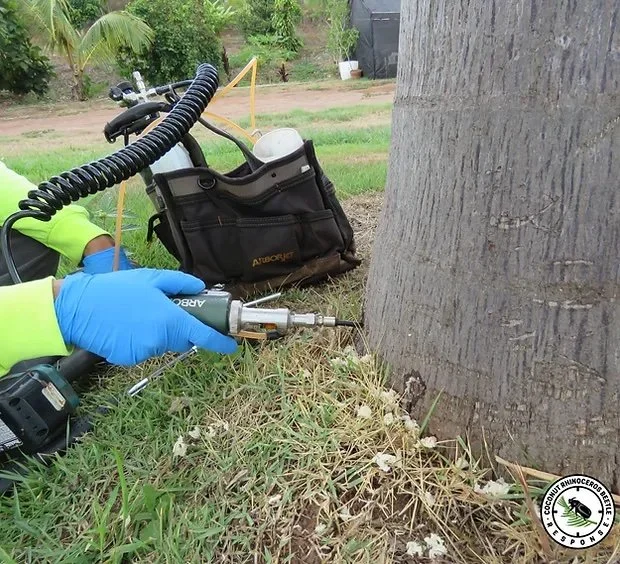
Injectable or drench-applied systemic insecticides—such as imidacloprid or acephate—move within a palm’s vascular system after application.
How They Work
These materials act when adult beetles ingest treated tissues or sap. They do not function as repellents and do not prevent beetles from landing or beginning to bore into the crown.
When They Are Used
Injectables are sometimes used when CRB feeding is suspected or confirmed. They are typically applied to ornamental (non-food) palms by licensed applicators or trained professionals, following label and regulatory requirements.
Observations From Research & Field Experience
Studies from Hawai‘i and the Pacific show varied outcomes
Some palms exhibit reduced feeding activity under certain conditions
Responses vary when the meristem has already sustained damage
Movement within the palm depends on timing, palm health, and method
Flower and fruit removal: For any palm receiving systemic insecticides, all flowers and developing fruits must be trimmed or removed throughout the treatment period and for at least one year afterward, or until the product is no longer active in the tree. This helps reduce exposure to pollinators and prevents residues from entering coconuts or water collected from palms.
Food and water use restrictions: Federal law requires that pesticides be applied only to the crops and sites listed on their labels. Most imidacloprid and acephate products are not labeled for use on food-bearing coconut palms or on palms used for drinking-water collection. Applying them to those trees would be considered off-label.
Waterway protection: Both acephate and imidacloprid carry strong environmental precautions. They are toxic to aquatic life and must not be applied to water, wet areas, or places where drift or runoff could enter streams, wetlands, ponds, or coastal waters. Equipment wash water and excess material must be handled carefully to prevent contamination.
Environmental and regulatory context: Acephate is no longer approved in the European Union (since 2003) following identification of human-health and environmental concerns. Outdoor uses of imidacloprid were also restricted in the EU beginning in 2018 due to risks to pollinators and aquatic organisms.
All use in Hawai‘i must follow EPA and Hawai‘i Department of Agriculture requirements, including label directions, permitted sites, and any licensed-applicator rules.
Environment Care
Summary
Injectable systemic products are one option used by some landowners and professionals. Their performance varies with timing, palm condition, and application method. Use requires attention to flower removal, waterway protection, and restrictions on food or water palms, and these products are generally applied only to ornamental, non-food palms within broader management plans.
This guidance reflects consensus from multiple credible Hawaii-specific and federal sources, including:
University of Hawaii CTAHR (Cooperative Extension):
Their 2022–2024 outreach materials and CRB management presentations caution that systemic insecticides like imidacloprid and acephate are not repellents, work only if ingested after feeding, and therefore should not be used preventively on healthy palms. They also note these products are not labeled for use on food-bearing palms and pose risks to bees, soil, and water.Hawaii Department of Agriculture (HDOA) – Coconut Rhinoceros Beetle Response Program:
Their field protocols restrict chemical use to targeted treatment of infested ornamental palms, not landscape-wide or preventive applications, emphasizing environmental and food-safety concerns.
What They Are
This category includes a range of additional materials or approaches used by some landowners—such as botanical mixtures, physical carriers, or other scent- or texture-based materials.
How They Work
They function by altering surface conditions or environmental cues that may influence beetle behavior.
When They Are Used
These materials may be placed in crown areas or nearby locations where beetles investigate. They are generally used alongside sanitation, monitoring, and other approaches.
Observations From Research & Field Experience
Experiences vary by material, placement, and environmental conditions
Many approaches originate from community experimentation
Effects may depend on weather, formulation, and reapplication intervals
Environment Care
Some materials do not have formal regulatory status as pest-control products
Techniques often rely on user-developed practices
Compatibility with food-bearing palms, wildlife, or the environment should be considered
Summary
Other potential preventatives represent supplementary tools chosen by some landowners. They are typically integrated with other CRB management methods, including sanitation, trapping, and observation.
Sand
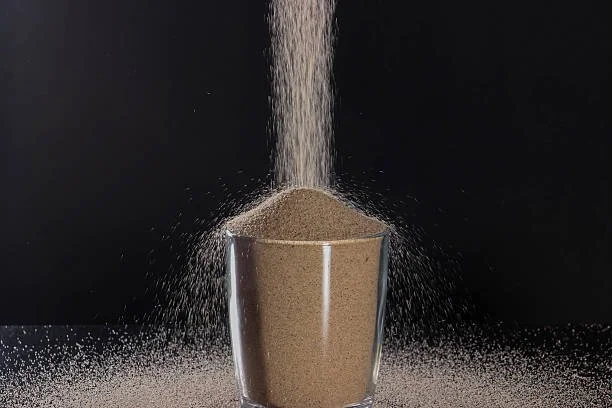
A layer of coarse sand packed into the crown of a coconut palm can act as a physical barrier to make it harder for Coconut Rhinoceros Beetles (CRB) to burrow toward the growing point (meristem). Sand fills crevices where beetles might hide or lay eggs and can discourage boring because it’s abrasive and lacks organic matter.
This method is preventive only, not a cure—it doesn’t kill beetles already inside the tree and must be used carefully to avoid smothering the meristem or trapping moisture that could cause rot.
Best results occur when dry, clean sand is used lightly in combination with netting, sanitation, and monitoring.
Salt
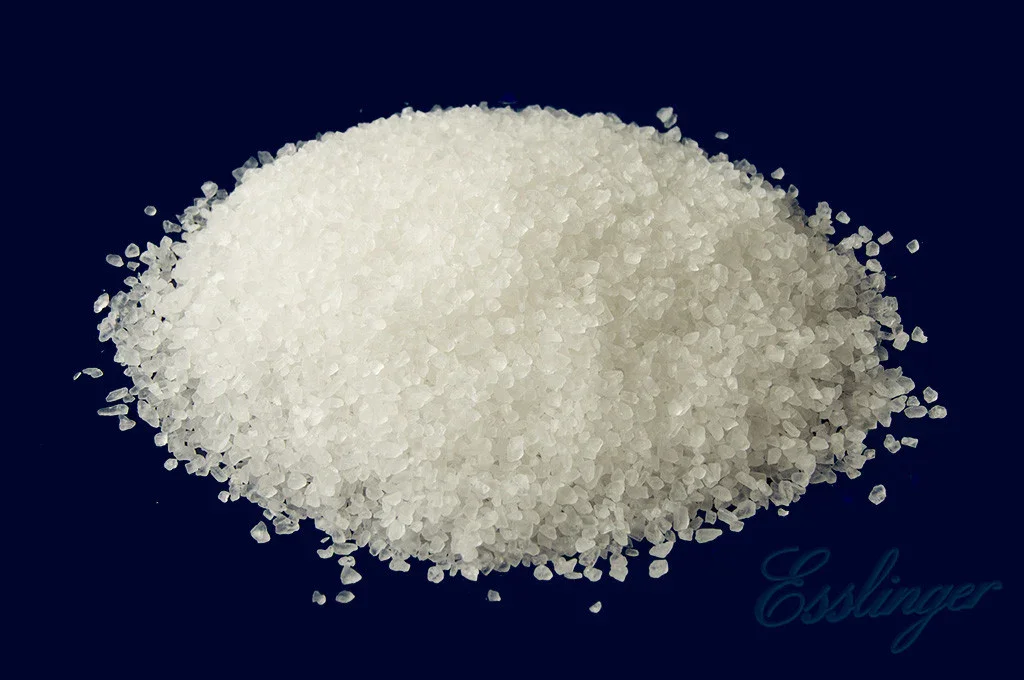
Some residents place sea salt in coconut palm crowns in hopes of discouraging Coconut Rhinoceros Beetles (CRB). While salt may dry surface tissues or create a temporary irritant layer, no scientific studies confirm that it repels or kills CRB. Excess salt can also injure the palm’s meristem and damage new growth, especially in young or drought-stressed trees. For now, this remains an anecdotal practice — not a proven deterrent—and should be used with caution, if at all, alongside established prevention and sanitation methods.
Neem Cakes & Meal
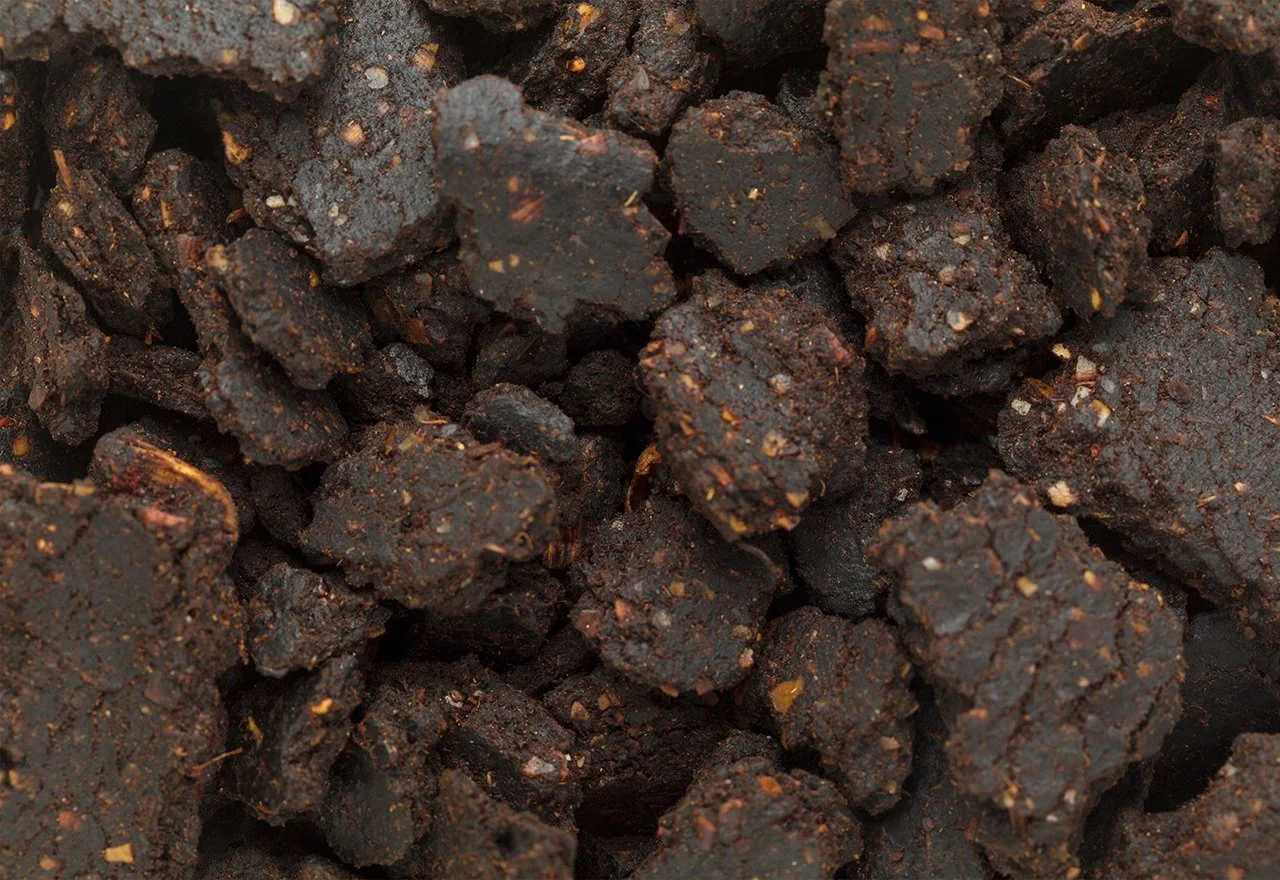
There is some evidence that neem-based materials can reduce CRB damage on coconut palms, especially when applied in particular crown zones or to compost/manure where larvae breed. However, placing neem seed meal in the crown should not be relied upon as a sole repellent barrier—it works best when combined with good sanitation, monitoring, and other protective methods.
❌
❌ Mothballs ❌
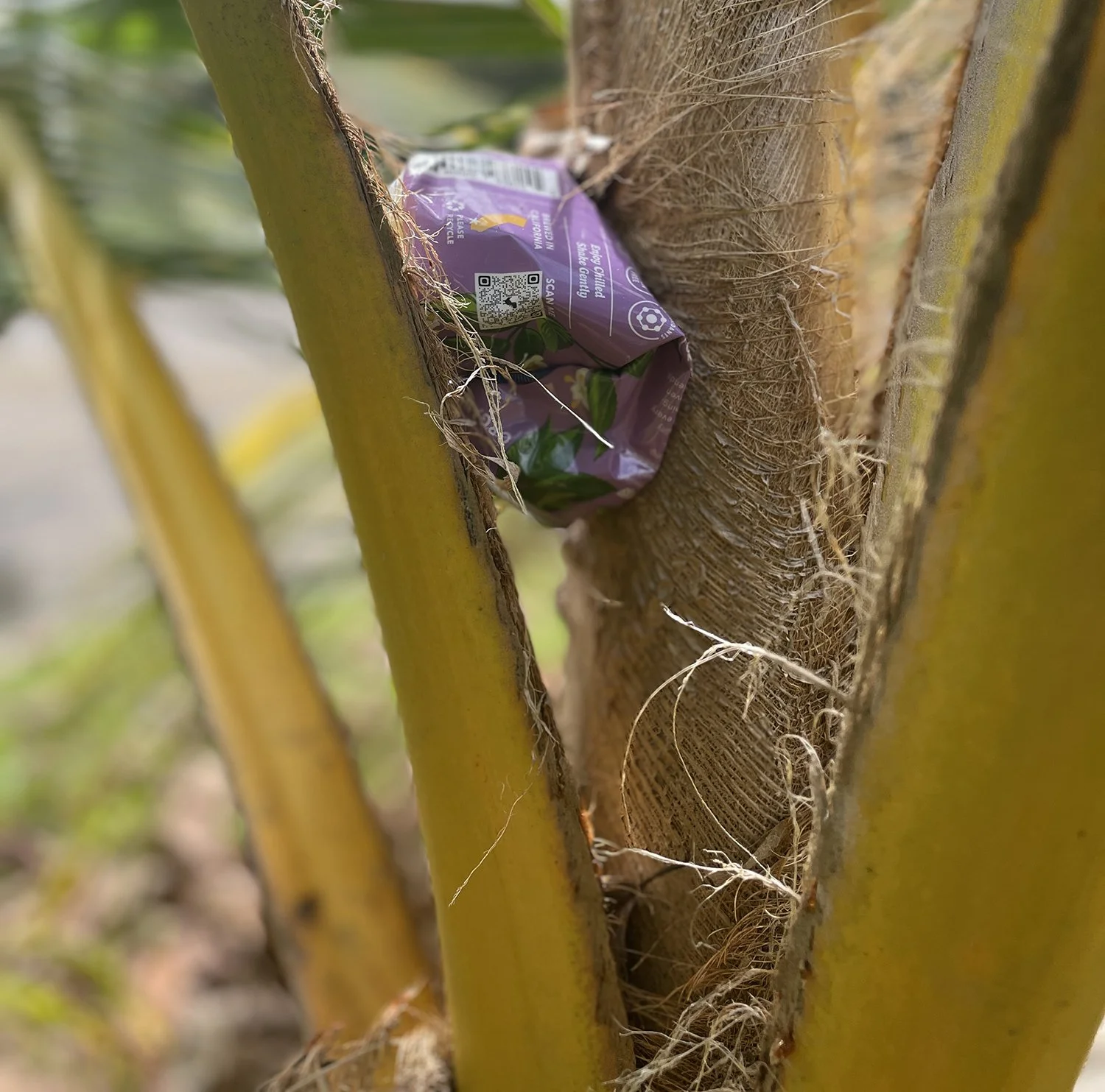
NOTE: It is illegal to use mothballs outdoors. Without this knowledge, residents have been experimenting with placing mothballs in used, folded soda cans tucked into the crowns of coconut palms as a deterrent to CRB. This method is intended to protect the mothballs from rain while allowing vapors to circulate near the growing point of the palm. While there are some reports from India of reduced beetle activity, mothballs contain chemicals not labeled for this specific use, and results may vary. Mothballs also break down quickly in sun and wind, and can contaminate soil and water. They also harm beneficial insects and are classified by the U.S. EPA as possible human carcinogens. We can not ethically suggest using mothballs as any contact with water sources, food plants, or animals may be harmful. Please stay informed as safer biological and botanical alternatives become available.
Biological Insecticides
(Metarhizium anisopliae, Metarhizium majus, and Beauveria bassiana / BotaniGard®)
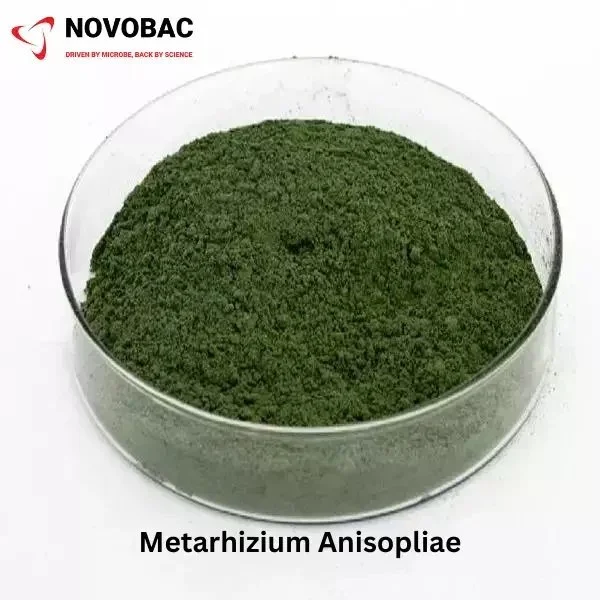
Biological insecticides in this category contain entomopathogenic (insect-infecting) fungi. Three species are often discussed in relation to CRB:
Metarhizium anisopliae: Used internationally for management of some scarab beetles.
Metarhizium majus – a closely related fungus being studied for potential CRB activity.
Beauveria bassiana – the active organism in BotaniGard®, used in Hawai‘i for other pests such as coffee berry borer.
These fungi infect insects through direct contact. Spores adhere to the insect’s exoskeleton, germinate, and grow through the cuticle under suitable conditions.
What They Are
In several countries affected by Oryctes rhinoceros, Metarhizium-based products are applied to compost, mulch, or plantation waste to target larvae.
Beauveria-based products like BotaniGard® are used in Hawai‘i for agricultural pests on labeled crops and sites.
These uses are generally part of integrated pest-management programs.
Where They Are Used
(Outside Hawai‘i CRB Programs)
Not approved for CRB: No biological insecticide products—Metarhizium anisopliae, Metarhizium majus, or Beauveria bassiana—are labeled or approved in Hawai‘i for CRB control.
Strain matters: Effectiveness depends on the specific fungal strain and formulation. Products purchased online may differ from strains evaluated in research programs.
Informal local attempts: Two known landowner-led attempts to use these organisms against CRB larvae in Hawai‘i did not show successful results.
Research underway: One Metarhizium strain with potential CRB activity is being studied by CTAHR under controlled research conditions. No results or recommendations have yet been released.
Current Status for CRB in Hawai‘i
All applications must follow the product label, registered crops, and site restrictions. Off-label use may be illegal.
Landowners interested in biological tools should check with CTAHR, HDOA, or the CRB Response Team for updates on ongoing research or possible future approvals.
In other regions where biological agents are used, they function as one part of a larger integrated approach that includes sanitation, green-waste management, and monitoring.
Practical Considerations
Metarhizium anisopliae, Metarhizium majus, and Beauveria bassiana (including products like BotaniGard®) are important biological control tools in other pest systems. At present, none are approved or recommended for CRB control in Hawai‘i, and informal local trials have not demonstrated reliable results. Research is ongoing, and future recommendations will depend on findings from official studies and regulatory decisions.